Mayor Bloomberg’s arguments about “health and safety” trumping free speech aren’t looking so hot.
The Guardian
reports that Constitutional lawyers said health and safety was unlikely to trump the first amendment. Darius Charney, attorney with the
Center for Constitutional Rights, said the right of people to assemble peacefully in political protest was one of the most fundamental rights under the first amendment: “In my view, the health and safety issues are rather minimal in comparison to the first amendment issue,” he said.
All speech is protected under U.S .law, but political speech has the greatest legal protection.
Keith Olbermann called for Bloomberg’s resignation: “Michael Bloomberg, you have now indeed become a symbol of the Occupy movement. You are ready to take your historic place with Mayor Daley and Governor Wallace and Sen McCarthy and Prime Minister Grenville and every other idiot who has made the fateful and fatal mistake of thinking that just because he has power and money, that this is nation in which everything has a price tag on it.We need you Mayor Bloomberg, to keep making these mistakes….Your nation needs you! Occupy needs you! Bloomberg now, Bloomberg tomorrow, Bloomberg forever!”
Hacktivists from Anonymous jump into the 2012 Campaign
with Occupy Iowa Caucuses
in Des Moines, Iowa on December 27th, and and January 3rd.
A new video posted to the Web over the weekend reveals plans from the hacking collective
Anonymous to target the 2012 U.S. presidential election, and it seems their first attack will be during next year’s Iowa Caucus.
In the YouTube clip uploaded in recent days, a digitized voice calls for other hacktivists aligned with
Anonymous to wage an Occupy-style protest at the presidential candidates’ campaign offices in Des Moines, Iowa next month, and then help shut down the
state’s caucuses slated to begin on January 3. Though Anonymous has often waged computer attacks and other demonstrations for
political purposes, this would mark the first time the hacktivists have attempted to take down a presidential election in America.
The reason for the protests, says the Anonymous spokesperson in the
video, is that the Democratic and Republican parties are not worthy of representing the voices of the Americans whom they have disenfranchised.
Since neither Anonymous nor the Occupy Movement has any formal leadership, it is impossible to formally link the operations to one
another, although the sit-in style demonstration planned in Des Moines would be on-par with the protests that started two months ago
in Lower Manhattan and spread across the world. Since Occupy Wall Street began, protesters
that are aligned to the movement have taken on a series of additional causes, while continuing to complain against corporate personhood and the buying out of American politics.
Officer Randy Peterson serves the police department of Urbandale, Iowa, where Michele Bachmann, Herman Cain and Rick Santorum
also have campaign headquarters. To the Des Moines Register, Peterson admits that the PD is aware of the video and says,
“We’ll just try to address any issues as they arise.”
John Benson, a public information officer for Iowa’s Homeland Security and Emergency Management
Division, adds that “it certainly has our attention.”
Anonymous-led attacks in the past have targeted law enforcement agencies, major corporations and government entities. In the last
month alone, however, the group has waged a series of attacks online, going after users of child pornography websites, the notorious
Zetas drug cartel in Mexico and Fox News.
Both parties are desecrating the American democracy and committing crimes against humanity on behalf of
American people. Both parties are funded by the same mega corporations, the same corporations that fund political campaigns, the same corporations that
buy lobbyist, the same corporations that operate the united states government.
The Primaries and Caucasus put on by these parties are part of an elaborate scam the deceives the public into voting for candidates
that serve the private interests of the mega corporations. These parties have deliberately driven tens of millions of people into poverty.
Voting for these parties is unethical, they have destroyed the American democracy.
We are calling upon you to occupy the campaign offices of presidential headquarters in Des Moines Iowa on December 27th, and
peacefully shut down the first in the nation Iowa Caucuses on January 3rd.
...so don't lose your job, or if you do, hope there's room for you at the
local homeless shelter.
Starting with Mayor Rudy Giuliani in New York, city after city has passed
"broken windows" or "quality of life" ordinances making it
dangerous for the homeless to loiter or even look "indigent" in public
spaces.
All over the country police have moved in on the tent cities of the homeless,
from Seattle to Providence, in raids that often leave the former occupants
without even their minimal possessions.
What occupiers from all walks of life are discovering is that to be homeless in
America is to live like a fugitive. (Full
Article).
The Census Bureau recently determined that Atlanta has the most income
inequality. The day before the new census data was released, Atlanta city
officials cleared out an Occupy Atlanta encampment and arrested dozens of
occupiers.
An aide: A recent study found that those who sit on "boards of
directors" average just 4.3 hours a week on board work, and the nation’s
top 1 percent took home more income than America’s entire bottom 40 percent.
The Social Security Administration researchers reported earlier this month that
half of America’s workers (the 99%) earned less than $26,364 last year.
By comparison: Larry Ellison (the 1%), the CEO at Oracle, has just listed a
6.9-acre home and horse farm he owns in Northern California for $19 million. He
has a $33 billion net worth. The Oracle kingpin owns at least 15 homes,
including two in Southern California’s Malibu. Says Malibu mayor John Sibert: “One
or the other of his yachts shows up here about four times a year, right off
shore. Other than that, we don't see him around town very much.”
But Americans aren't even allowed to live in a tent if we lose our jobs and are evicted
from our homes. We have to live as homeless roamers.
Police in Austin, Texas made 39 arrests early Sunday as they moved to enforce a new rule banning food tables in the City Hall plaza where protesters have camped out..
"On a night where there are hundreds of drunks driving around town, they have all these resources here to take down three food tables," protester Dave Cortez
told the
newspaper.
More than 3 million people marched through Rome in opposition to the U.S.-
led invasion of Iraq in 2003 (as Americans had also been protesting all along),
but 8 years later as of October 2011 we're still in Iraq - - and the corporations have been profiting the entire time.
And I also noticed that much smaller countries have gathered much larger crowds. Will things have to get much
more worse in the U.S. before there can really be mass protests...enough so as to influence political and corporate behavior?
On January 20, 1980 the Super Bowl was attended by a record 103,985 spectators, which remains a record through today. How many people are in
Zuccotti Park trying to end political corruption and corporate greed?
It looked discouraging when I looked at past U.S. protests and compare them to what the people in Europe and the Middle East have done.
It would help if all the colleges got involved the way they did during the Vietnam
Era. While although they have no fear of being drafted into war these days, they still have unemployment and college debt to fear.
So now it's almost illegal to be jobless and homeless through no fault of
your own. Only in America.
In 1916 and 1917 suffragists
for the women's movement picketed the White House, with one silent picket
leading to the arrest of 218 women from 26 states.
The Bonus
Army was the popular name of an assemblage of some 43,000 marchers (17,000
World War I veterans, their families, and affiliated groups) who gathered in
Washington, D.C., in the spring and summer of 1932 to demand immediate
cash-payment redemption of their service certificates. Its organizers called it
the Bonus Expeditionary Force.
N.O.W. (Women's Movement)
On August 26, 1970, on the 50th anniversary of women's suffrage, NOW
activists organized a Women's Strike for Equality. Approximately 50,000
women marched in New York and another 100,000 women participated in
demonstrations and rallies in 90 cities, 42 states.
In 1977 NOW organized over 100,000 people to march on Washington in
95-degree heat, in a sea of purple, gold and white banners (reflecting the
suffragist colors), to press for an extension of the time limit on ratifying the
ERA.
Having won the extension, NOW activists organized a record 90,000 people to
march on Chicago, again urging Illinois' ratification, in the 1980 Mother's
Day March for ERA.
After the defeat of the ERA in 1982, NOW did not organize another major march
on women's rights until the East Coast/West Coast March for Women's
Equality/Women's Lives in March 1986, when over 120,000 women and men
demonstrated in Washington, D.C., and the following weekend in driving rain in
Los Angeles, against the impending threat to abortion rights.
NOW's April 1989 March for Women's Lives drew crowds that had not been
seen in Washington since the Vietnam protests of 1969 and 1971. After organizing
a recording-breaking crowd of 600,000 in April, NOW followed up with a rally of
350,000 that fall — the November, 1989 Mobilize for Women's Lives at
the Lincoln memorial -- and broke their own record by bringing 750,000 abortion
rights supporters for a massive April 1992 March for Women's Lives
In 1995, more than 200,000 people gathered in Washington, D.C., on April 9
for the Rally for Women's Lives, the first and largest mass action to
stop violence against women.
Vietnam Protests
They lasted about ten years from the early 60s into the early 70s. It's well
documented and too lengthily to list there. In 1969 Students for a Democratic
Society held its national convention in Chicago from 18 June through 22
June. Huge
list at Wiki.
Actual "Occupations"
The Very First Actual Occupation: On 9 April, 1969, 300 students at Harvard
University seized the administration building in protest of the war. They
threw out eight deans and locked themselves in. Harvard students took over University
Hall, one of the college's oldest buildings. Opposed to the escalating war
in Vietnam, the protesters demanded that Harvard end its Reserve
Officers' Training Corps (ROTC) program. The demonstrators had vowed
non-violent resistance, but in the early hours of April 10th, university
administrators made the unprecedented decision to call in city and state police.
The use of billy-clubs and mace to remove the demonstrators outraged even those
members of the community who did not support the takeover. The sit-in at Harvard,
and the so-called "bust" that ended it, were part of a national
phenomenon; but as one participant put it, "Like it or not, whatever
goes on at Harvard gets a lot of attention."
In 1977: Initially Joseph Califano, U.S. Secretary of Health, Education
and Welfare, refused to sign meaningful regulations for Section 504 of
the Rehabilitation Act of 1973. After an ultimatum and deadline,
demonstrations took place in ten U.S. cities on April 5, 1977.
The sit-in (occupation) at the San Francisco Office of the U.S. Department of
Health, Education and Welfare, led by Judith Heumann, lasted from April 5th
to until May 1st, 1977 (25 days). More than 150 demonstrators refused to
disband. This action became the longest sit-in at a federal building to date.
Joseph Califano signed the regulations on April 28, 1977.
The following year in 1978 disability rights activists successfully protested
the Denver Regional Transit Authority with a year-long civil disobedience
campaign because the transit system was inaccessible to people who used
wheelchairs.
In 1989, students occupied the administration building at Wayne State
University for either eleven
or twelve
days in response to racist incidents on campus.
The Afrikan Student Union at Ohio State University occupied the
offices of the campus president for eight
days in 1998 in protest of proposed changes in the Office of Minority
Affairs.
At Harvard in 2001, a sit-in demanding that university employees be
paid a living wage lasted for three
weeks. in Massachusetts Hall. (Alt.
source)
Another living wage sit-in, this one at Washington University in 2005,
lasted for eighteen
days.
In May of 2008, students protesting the University of North Carolina’s
ties to sweatshop garment makers occupied the lobby of their administration
building for sixteen
days.
On September 24th, 2009 students and workers at UC Santa Cruz began the
occupation of the Graduate Student Commons as part of a day of action at
all UCs across the state. From
CNN: "About 70 students at UC Santa Cruz in California avoided arrest
early Sunday morning when they surrendered the administration building they had
occupied for three days, according to a school
spokesman."
The Wisconsin Protests and Occupation
February 13, 2011 - Gov. Scott Walker unveils his budget repair
bill, which would curb most collective bargaining rights for most public
employees and asks them to increase contributions for benefits. Democrats and
labor leaders call it union busting and begin to mobilize against it. About 150
people protested in front of the Capitol while about 100 others demonstrate in
front of the Governor's Mansion.
February 14 - Teaching and project assistants from the University of Wisconsin–Madison
distributed "We ♥ UW: Don't Break My ♥" Valentine cards to
the governor, as a means of protesting the bill's negative impacts on working
conditions at the university
February 15, 2011 - At least 10,000 protesters gather at Capitol Square, while
3,000 more fill the Capitol.
February 16 - The number of protesters in front of the Wisconsin State Capitol
was estimated at 30,000.
February 17, 2011 - About 25,000 people continued the protest, citing concerns
that Republicans were attempting to pass the legislation without scheduling
adequate time for public review and debate. Senate Minority Leader Mark Miller
led the 14 senate democrats in fleeing the state to prevent the quorum necessary
for a vote on the Budget Repair Bill. At the same time, protesters occupied the
Senate chambers. Protesters eventually had undertaken a physical occupation of
the Capitol building, establishing a fully functioning community within the
public spaces of the Wisconsin State Capitol, including an information center, a
sleeping area, food stations with food for protesters supplied by local
businesses.
February 18, 2011 - Tens of thousands of protesters jammed the Wisconsin capitol
and many schools closed for a third day. State troopers were enlisted in the
hunt for 14 Democratic state senators whose disappearance has prevented a vote
on the new governor's controversial budget proposal.
February 19, 2011 - Some of the largest crowds yet (70,000 protesters) descended
upon Wisconsin's state capitol to march, chant and shout about Republican
Governor Scott Walker's controversial proposal to trim benefits and curtail
collective-bargaining rights.
February 26, 2011 - Protests hit its peak on Saturday, when more than 100,000
people descended on the Capitol grounds for a rally, which was the largest state
rally since the Vietnam War.
Began September 17, 2011 - New York City's Zuccotti Park. The mother
of all occupations. To date: Occupied 6 Weeks
and 2 Days and counting. By October 9, similar demonstrations were
either ongoing or had been held in 70 major cities and over 600 communities in
the U.S. Internationally, as other "Occupy" protests have modeled
themselves after Occupy
Wall Street, in over 900 cities worldwide.
Tree- Sitting
Sometimes, tree-sitting
is also used as a long-term resistance strategy, with activists occupying trees
for months or years at a time. There was a tree-sitters' camp in Berkeley,
California protesting the planned removal of coastal live oaks. The protesters
were in the trees from February 12, 2008 to September 9, 2008 (7 months), making
it the longest running urban tree-sit in history. (number of people unclear)
Rallies and Marches and other Mass Protests
"I
Have a Dream" is a 17-minute public speech by Martin Luther King,
Jr. and was delivered on August 28, 1963 from the steps of the Lincoln Memorial
during the March on Washington for Jobs and Freedom. It was a defining
moment of the American Civil Rights Movement. Over 200,000 civil rights
supporters attended.
The March
for Women's Lives was a demonstration for reproductive rights and
women's rights, held April 25, 2004 on the National Mall in Washington, D.C..
The National Park Service no longer makes official estimates of attendance after
the Million Man March controversy in 1994, so official estimates are
often speculation. March organizers estimated that 1.15 million people
participated.
The Million
Man March was a gathering of social activists, en masse, held on and
around the National Mall in Washington, D.C. on October 16, 1995. ABC-TV funded
researchers at Boston University estimated the crowd size to be 837,000.
The Million
Woman March was a protest march organized on October 25, 1997, in
Philadelphia, Pennsylvania. Organizers estimated an attendance of 2.1 million.
The Genoa Group
of Eight Summit protest, from July 18 to July 22, 2001, was a dramatic
protest, drawing an estimated 200,000 demonstrators. Dozens were hospitalized
following clashes with police and night raids by security forces on two schools
housing activists and independent journalists. People taken into custody after
the raids have alleged severe abuse at the hands of police.
The Restoring
Honor rally was held on August 28, 2010 at the Lincoln Memorial in
Washington, D.C. and was organized by Glenn Beck. A scientific estimate placed
the crowd size around 87,000, while media reports varied dramatically from tens
of thousands to 500,000.
Other Mass Gatherings
In 480 B.C., the Persian Army marched into the Battle
of Thermopylae with between 200,000 and 500,000 men.
More than 2,000 years later, in 1943, the Soviet Union's Red Army suffered
more than a million casualties at the Battle
of Stalingrad.
Also during the early 20th century, Mahatma Gandhi led millions of Indians in
protest against British rule through noncompliance. Indian public officials
resigned, parents withdrew their children from British schools and participants
boycotted British goods. Exact figures for such a movement are difficult to
calculate.
Largest Mass Protests
When it comes to protests, the book of Guinness World Records
currently lists the Feb. 15, 2003 Iraq
War protest in Rome as the largest antiwar rally in history. The event drew
an estimated crowd of 3 million. On that same day, protesters gathered in nearly
600 cities in a coordinated global effort to express moral outrage against the
U.S. invasion of Iraq. This included a reported 1.3 million protesters in
Barcelona, Spain, and between 750,000 and 2 million protesters in London
[sources: Guinness Book of World Records]. All told, between 6 and 10 million
people participated in the global protest. According to the French academic
Dominique Reynié, between January 3 and April 12, 2003, 36 million people
across the globe took part in almost 3,000 protests against the Iraq war
During January 2007, an estimated 60 million Hindu pilgrims gathered at the
convergence of the Ganges and Yamuna rivers in northern India for the Ardh-Kumbh
Mela, or festival [source: BBC].
Largest Massive Peaceful Gatherings
Over five million
* Pilgrimage to Sabarimala Hindu temple in Kerala, India is the largest annual pilgrimage in the world with an estimated 45–50
million devotees visiting every year.
* An estimated 40 million people gathered over 41 days in Sabarimala, India between 15 November and 26 December 2008.
* An estimated 34 million people gathered over 11 days in Rajahmundry, India for Godavari pushkaram between 31 July and 10
August 2003.
* An estimated 15 million people attended the funeral of C. N. Annadurai in Tamil Nadu, India in 1969.
* An estimated 10 to 14 million people visited the shrine of Imam Hussein in Karbala, Iraq during Arba'een in 2009.
* An estimated 10 to 14 million people visited the shrine of Imam Hussein in Karbala, Iraq during Arba'een in 2010.
* An estimated 9 million people visited the shrine of Imam Hussein in Karbala, Iraq during Arba'een in
2008.
* An estimated 8 million people attended the annual feast of the Black Nazarene in Manila, Philippines on January 2011.
* An estimated 7 million people attended the 25th anniversary of El Shaddai Manila,
Philippines.
* An estimated 5 million people gathered in Sabarimala, India on 14 January
2007.
* Over 5 million people attended a World Youth Day Rally in Manila, The Philippines in 1995 to see Pope John Paul II.
Two to five million
* Up to 5 million people came to welcome Ayatollah Khomeini in Tehran, Iran on his return to Iran on 1 February 1979.
* An estimated 5 million people attended the funeral of Egyptian President Gamel Abdel Nasser on 1 October 1970 in Cairo, Egypt.
* An estimated 4 million people attended the funeral of Abdel Halim Hafez in Egypt.
* An estimated 4 million people attended the funeral of Umm Kulthum in Cairo, Egypt on 6 February 1975.
* An estimated 4 million people attended the closing Mass of World Youth Day 1995 in Manila, Philippines.
* An estimated 2 to 4 million people are reported to have attended the funeral of Pope John Paul II in Rome, Italy on 7 April 2005.
* An estimated 3 million people marched through Rome, Italy in opposition to the U.S.-led invasion of Iraq in the largest anti-war
rally in history on February 15, 2003.
* An estimated 3 million people attended a parade in Boston, United States celebrating the Boston Red Sox's victory on October
30, 2004. The victory ended an 86 year drought of world series championships and ended the era of the famous Curse of the Bambino
for the Red Sox.
* An estimated 3 million people attended the annual feast of the Black Nazarene in Manila, Philippines on January 2008
* An estimated 3 million people gathered for the funeral of Ayatollah Khomeini in Tehran in 1989.
* An estimated 2 to 3 million people gathered to rally in defense of workers rights in Rome, Italy on March 23, 2002.
* An estimated 2.8 million people made the annual Hajj to Mecca,Saudi Arabia (excluding unregistered pilgrims which were over
0.75 million, the number of pilgrims would then be over 3.5 million) in November 2010.
* An estimated 2.7 million people attended the closing Mass of World Youth Day 2000 in Rome, Italy.
* An estimated 2.5 million people participated in a beatification mass held by Pope John Paul II in Błonia Park, Kraków, Poland.
* An estimated 2.5 million people participated in the São Paulo Gay Pride Parade that took place in June 2006 in'São Paulo,
Brazil.
* An estimated 2 million people gathered in Philadelphia, USA for the Stanley cup parade for the 1974 Stanley Cup Champions, the
Philadelphia Flyers.
* An estimated 2 million people gathered for the Republic Protests on May 13, 2007 in İzmir, Turkey.
* An estimated 2 million people are reported to have gathered in Madrid, Spain for a parade celebrating the success of Spain
national football team in 2010 FIFA World Cup.
* An estimated 2 million Hindu women gathered at the Attukal Temple in Kerala, India on 4 March 2007, making it the largest
gathering of women in history, overtaking the record set by the same festival on February 23, 1997.
* On 25 May 2010 an estimated 2 million people gathered at the 9 de Julio avenue in Buenos Aires to attend several concerts and
street art parades celebrating the Bicentennial of the May Revolution
* An estimated 5 million people are reported to have gathered in Tahrir Square for a Celebrating the removal of Mubarak regime on
19 Feb 2011 during the Egyptian revolution.
* An estimated 2 million people are reported to have gathered in India for a Christian healing service, conducted by Benny Hinn in
2005; with the three day attendance totaling 4 million. But, Indian newspapers only reported attendance in the order of
thousands, where as Binny Hinn's personal website claimed 7.3 million attendees.
One to two million
* An estimated 1.5 million attended the Diretas Já protest (April 16, 1984) in São Paulo, Brazil
* An estimated 1.0 million gathered in London, England for the wedding of Prince William and Catherine Middleton on 29 April
2011.
* An estimated 1.5 million people attended the funeral of former Turkish Prime Minister Necmettin Erbakan on 1 March 2011. The
length of the funeral cortege surpassed 4 miles.
* An estimated 1.2 million people attended the inauguration of Barack Obama in Washington, D.C. on 20 January 2009.
* An estimated 1.5 million people attended the Live 8 concert in Philadelphia, PA 2 July 2005.
* An estimated 1.5 million Hindu women gathered at the Attukal Temple in Kerala, India on 23 February 1997 for what was at that
time the largest gathering of women in history and earned the temple a spot in the Guinness Book of World Records.
They brought cooking pots with which they prepared food as an offering to a goddess.
* An estimated 1.2 million to 1.5 million people attended the "Telangana Maha Garjana", at Warangal in Andhra Pradesh,India on
16 December 2010 to demand the formation of Telangana as an Independent Statehood.
* An estimated 1.25 million people attended a Papal mass given by Pope John Paul II in the Phoenix Park, Dublin, Ireland on 29
September 1979. The estimated attendance was about one third of the population of Ireland gathered in one expansive public area.
* An estimated 1.6 million people (30 percent of Lebanon's 4 million population) gathered in Beirut, Lebanon on 14 March 2005 to
demand an end to the Syrian military presence in Lebanon. This event is known as the Cedar Revolution.
* An estimated crowd of over 1 million protesters gathered at the headquarters of the UN Military Observer Group in Srinagar,
Jammu & Kashmir on 1 March 1990 to present a memorandum addressed to the Secretary-General of the United Nations demanding
that Kashmir be given the right of self determination.
* An estimated 1 million people participated in what is considered the largest procession in the history of New Delhi, India on 8
October 1970 in commemoration of Hans Ji Maharaj, led by his son Guru Maharaj Ji (now Prem Rawat).
* An estimated crowd of over 1 million revelers attended Love Parade in Essen, Germany on 25 August 2007.
* An estimated crowd of over 1 million Colombians gathered in Bogotá, Colombia on 4 February 2008 to protest against FARC.
* An estimated crowd of 750 thousand to 1.5 million people gathered in Central Park in New York City on 22 April 1990 to celebrate
Earth Day.
* An estimated crowd of about 2 million people attended the funeral at Dhaka of President Ziaur Rahman of Bangladesh on 30 May
1981.
* An estimated 1 million people attended the funeral procession of the French enlightenment writer Voltaire on 11 July 1791.
* An estimated one million Catholics gathered for the mass at Saint Peter's Square, to celebrate John Paul II's beatification on May
1, 2011.
* An estimated 1.2 million attended World Youth Day 1997 (August 19–24) in Paris
* An estimated 1 million attended World Youth Day 1987 (April 11–12) in Buenos Aires, Argentina
* An estimated 1.4 million attended World Youth Day 2011 (August 16–21) in Madrid
The 1% mocked the homeless and homeowners, many who have been illegally foreclosed
on, in a Halloween celebration. First they TRICKED innocent homeowners, then
they TREATED themselves. Now they're being investigated for fraud by the
authorities.
This story makes one wonder how prevalent this is among the uber-wealthy. Oh,
what a real treat it would be if only I could be a fly in the wall in their
mansions and boardrooms! It's no wonder those protesters on Wall Street
are camped out in a New York City park in the freezing cold and snow. And maybe
the 1% is right now gazing down upon them in the comfort of their warm multi-million-dollar
penthouse suites, laughing and making jokes as they sip on their $50,000-a-bottle
Pernod-Ricard Perrier-Jouet champagne.
Late last year Baum’s firm, which one lawyer for homeowners said processes about half the foreclosures in New York
state, was ordered to pay legal fees, fines, and costs by a Nassau County District Court Judge.
A probe came after JPMorgan Chase and Ally Financial's GMAC mortgage
unit said they would stop repossessions in 23 states where courts supervise home seizures and
Bank of America froze foreclosures nationwide.
Steven J. Baum's firm has been accused of overcharging, filing false documents and representing parties on both sides of a mortgage transfer. Baum runs the firm his father founded in
1972 and he
is said to be worth $50 million.
Baum has gained notoriety statewide and nationally, as the firm’s work in the
foreclosure crisis placed it in the midst of the controversy over improper legal paperwork and so-called
“robo-signing.” Employees of banks and law firms have admitted to signing tens of thousands of affidavits and other court documents attesting to the
circumstances of a foreclosure without actually knowing them or reviewing them, as required by law.
The controversy and investigation are major issues for Baum, which employs well over 100 people.
Originally a small real estate firm, Baum has grown rapidly over the past decade into New York’s dominant foreclosure firm, handling
over 40 percent of filings statewide on behalf of the nation’s biggest mortgage lenders and loan servicers.
In the process, it has mastered the task of generating and filing routine court papers through an assembly-line operation, enabling it to
churn out tens of thousands of documents a year for its bank clients in an effort to speed foreclosures.
The firm has become the linchpin in the flood of foreclosure activity in the state. As a result, it’s now squarely in the cross hairs of
consumer advocates and opposing attorneys, who denounce its work and label it “a foreclosure mill” as they fight it in court.
“It’s truly a foreclosure factory. They really mass-produce these things without putting sufficient effort into preparing a polished
product,” said Craig D. Robins, a Long Island consumer bankruptcy and foreclosure attorney.
“The quality of their work is sub-par.”
The firm and its attorneys have been criticized for submitting court documents that opposing attorneys and judges say are riddled with
errors and unsubstantiated claims.
There are also assertions of rampant conflicts of interest with Baum, as some of the firm’s attorneys are signing mortgage
“assignments” or transfers from one bank to another as “deputies” or agents of the Mortgage Electronic Registry Service, or MERS. At
the same time, their firm represents the bank that is trying to foreclose, so the firm is representing both sides of the mortgage
transfer. And during the process, their employment with Baum is not disclosed to the court.
MERS is a service created by the banking industry to simplify the sale and transfer of loans by recording them in MERS’ name
without having to file new county records each time a different bank takes over. But the validity of the entire system, and Baum’s role
in it, is now under attack nationwide. MERS
is now being sued by Delaware's Attorney General
Critics have accused Baum's firm of not only sloppy and unprofessional work, but fraud. It’s even the target of a couple of class-action
racketeering lawsuits.
“People have talked about robo-signers and paper irregularity. This is fraud,”
said Ronald J. Kim, an attorney in Saratoga Springs. “A lot of the things Baum has done, I would have had my license taken away for.”
And in Nassau County District Court, Judge Scott Fairgrieve accused the Baum firm of misrepresenting its client’s position and trying
to mislead the court, calling its actions “outrageous,” “reprehensible” and “repugnant.”
Now the state New York attorney general has set his sights on the firm. Most of the nation’s attorneys general are negotiating a massive $20
billion settlement with lenders, mortgage servicers and related parties.
In particular, he’s examining the relationship between Baum and Pillar Processing, a legal documents processing and outsourcing
company that Baum founded and then sold in 2007 to a Wall Street hedge fund,
Tailwind Capital. Besides documents, Pillar provides
human resources, accounting and technology services for Baum.
Although legally separate, the two companies remain intertwined, with their office suites sharing the same space, secured entrance
and receptionist in a nondescript suburban office building at 220 Northpointe Parkway. Most of Pillar’s work is for Baum’s firm,
although Pillar’s employees for the most part are not lawyers.
From InfoWars - October 30, 2011
- On Friday, the law firm of Steven J. Baum, that represents virtually all
the giant mortgage lenders, including Citigroup, JPMorgan Chase, Bank of America and Wells
Fargo, threw a Halloween party.
The party is the firm’s big annual bash. Employees wear Halloween costumes to the office, where they party until around noon, and
then return to work, still in costume. A former employee of Steven J. Baum recently sent
snapshots of last year’s party via e-mail, and in the e-mail it said that
"she" wanted to show the appalling lack of compassion toward the homeowners — invariably poor and down
on their luck — that the Baum firm had brought foreclosure proceedings against.
In one photo, a woman wears a sign around her neck that reads, "3rd party squatter. I lost my home and I was never served."
That statement is meant to mock "the typical excuse of the homeowner trying to evade a
foreclosure."
Another picture shows a coffin with a picture of woman with her eyes cut out. A sign reads,
"Rest in Peace. Crazy Susie." That's allegedly a reference to Susan Chana Lask, a lawyer who filed a class-action suit against Steven J. Baum.
According to the New York Times, the firm is already under investigation by the New York attorney general, and it recently
agreed to pay $2 million to resolve an investigation by the Department of Justice into whether it had "filed misleading pleadings, affidavits, and mortgage
assignments in the state and federal courts of New York."
The
Buffalo News says that those at the office Halloween party were criticized as
being insensitive toward people who were losing their homes.
A corner of the office party was decorated like foreclosed homes; and a sign
reading “Baum Estates.”
The head of the firm, Steven J. Baum, said in a statement to The Buffalo News on Saturday that the photos
obviously were in poor taste. "On behalf of the firm, I sincerely apologize for what happened
at our Halloween party."
The photos had generated 175 reader comments on the New York Times website as of Saturday
evening. “I am appalled but find I pity those in these photos,” one reader wrote.
“The lack of their empathy and humanity are apparent.”
Photos from a former employee of the law firm of Steven J. Baum
Steven J. Baum employees mocking homeowners who have
been foreclosed on.
A corner of the Baum office was decorated to look like a row of foreclosed homes.
O.T.S.C. stands for order to show cause, a last-ditch motion often made by desperate homeowners about to be evicted from their homes.
Contact Steven J. Baum
Phone: 716-204-2400
* Fax: 716-204-4600
* 716-204-2496
Regular Mail
P.O. Box 1291
Buffalo, NY 14240-1291
Overnight Mail (Physical address of office)
220 Northpointe Pkwy, Suite G
Amherst, NY 14228
Long Island Address
900 Merchants Concourse
Suite 412
Westbury, NY 11590
* This is not a mailing address *
Just like the Tea Party, the Occupy Wall Street movement is
now locked and loaded.
A citizen militia group armed with AR-15s were defiantly standing in front of
the local police. The U.S.
Border Guard is making its presence felt at the Occupy Phoenix
demonstration to protect free speech rights, arguing that the second amendment
prevents the state from abusing the first amendment. (Original video and article
posted at Alex Jones InfoWars).
The article says the group has been labeled “neo-nazis” by the Southern
Poverty Law Center, which is usually a demonization tactic, but this
particular individual (shown in the video clip below and known as J.T. Ready) has
attended neo-nazi rallies in the past and is supposed to be "closely affiliated" with the
"fringe"
National Socialist Party.
Wiki
says there is no clear definition of national socialism, and that the term has
been used to mean many different things. Here it
says, "National Socialism is the opposite of international finance
capitalism, i.e. the opposite of globalization. Under National Socialism,
engineers would not lose their jobs to outsourcing, and great industrial
cities would not be disintegrating and turning back to farmland."
But regardless...the man being interviewed in the video sounded very
articulate, he didn't spew hate or racism, and he was just but one
member in the group of U.S.
Border Guards at the Occupy Phoenix protest.
The major difference between the Tea Party and the Occupy Wall
Street movement? One might argue that The Tea Party went home every
night to their comfortable homes, while the Occupy protesters are
toughing it out in the cold while living in tents.
(Below) U.S. Border Guard J.T. Ready with U.S. Republican Arizona Senator Russell Pearce
(left) and at the protest (right).
(Below) Supporters for Joe Miller, the Tea Party favorite for Alaska
in 2010 and the Republican Party nominee.
(Below) Even Tea Party presidential candidate Rick
Perry was publicly exercising his Second Amendment Right.
(Below) More Second Amendment Tea Party enthusiasts
.
And just like with the Tea Party (or any other group,
"fringe" or otherwise, even the police and military) there will always
be a segment of racists. But even THEY are part of the 99%.
IT'S SIMPLE MATH, 1 + 1 + 1 = PROTESTS
NO JOBS and BUDGET CUTS - The immediate crisis facing the United States economy is the jobs deficit, not the federal debt -- and budget cuts may make matters worse.
+
A WORSENING ECONOMY - On most major measures of economic health, the economy is still worse today than it was before the recession began.
+
INCOME INEQUALITY - The current protests on Wall Street effectively calls attention to the extreme and growing income inequality in the United States, an economist writes. "Storming the Capitalist Castle"
=
PROTESTS - Today "Occupy" protesters clashed with police in Denver, Portland, and Austin: Police use rubber bullets and pepper spray on demonstrators as Occupy Denver protest turns ugly.
Denver: Police shot rubber bullets and used pepper spray - 20 arrested.
Austin: Police arrested at least 38 protesters.
Portland: At least 30 protesters were cuffed after they refused to leave Jamison Square.
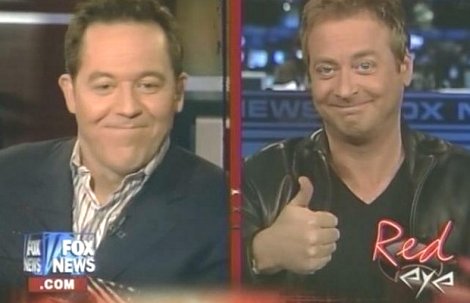
If you can, watch the Fox News Red Eye "Half-time Report" from tonight when they discussed
Occupy Wall Street. Greg Gutfeld made a total ass out of himself in a discussion
with Andy Levy.
Greg Gutfeld said that if the Occupy Wall Street protesters got bailed out and had their college loans forgiven, he'd go on the street to protest.
PARAPHRASED....
Andy Levy : "Oh, so it's OK to bail out the banks?"
Greg Gutfeld : "That's different, the government gave them that money."
Andy Levy : "The government? Aren't we the government?"
Greg Gutfeld : "That's different. The bankers weren't camping out in a park saying 'give me a bail out, give me a bail out.'"
Andy Levy : "No, the bankers were in their million-dollar penthouse suites saying 'give me a bail out, give me a bail out.'"
It's common knowledge that, like the Republicans, Fox News pimps for
the wealthiest 1%. So seeing Greg shamelessly pimp for the banks was no
surprise. But seeing Andy Levy so skillfully counter Greg's insanely lame argument
was priceless!
To join the exclusive 1% club, Americans need a minimum annual income of $516,633
according to the Tax Policy Center.
The result of 40 years of conservative-leaning policies has undermined labor
unions and favored banks and corporations over workers. If he had been alive
today, when Mark
Twain wrote in his autobiography, "It kept us hoping and hoping
during 40 years, and forsook us at last," he could have been referring
to these last 40 years of middle-class decline.
The Gilded
Age is a period roughly defined by the end of the Civil War in 1865 and the beginning of World War
I in 1917 in the United States when the economy transformed itself and grew under the leadership of new
tycoons; and when America's mercantile society had once again transformed itself under the impact of the nouveau
riche -- the opportunistic industry leaders and speculative railroad promoters. They
were once known as tycoons, moguls, magnates or robber barons. Today they call
themselves CEOs.
During the Gilded Age the super-rich industrialists
and financiers such as John D. Rockefeller, Andrew W. Mellon, Andrew Carnegie,
Henry Flagler, Henry H. Rogers, J.P. Morgan, and the Vanderbilt & Astor
families were attacked as "robber barons" by critics, who believed
they cheated to get their money -- and lorded it over the common people.
John D. Rockefeller used his wartime profits from the Civil
War to finance his investment in Samuel Andrews' oil refinery, which led to the creation of
Standard Oil and his huge fortune. But Rockefeller was also an astute businessman who
knew how to borrow money to finance promising projects. Most (Northern) businesses benefited from the
Civil War's demand, so many considered this "war profiteering".
Philip Danforth Armour more directly profited from the Civil War
by selling pork "short" in New York City and made his first million in the process.
Then he went to Chicago, where he built up a huge meat-packing house in partnership with his brother.
In the 1980s, the Armour brothers brand was split between Pinnacle Foods and
Smithfield Foods. The Armour brand for use in the pharmaceutical industry is owned by
Forest Laboratories Inc.
The Civil War allowed others to profit as well. The Pacific Railroad
Act lay the ground for the first U.S. transcontinental railroad. The subsequent fortunes of the Thomas C. Durant and Ames, as well as the Pacific Quartet (Leland Stanford, Charles Crocker, C.P. Huntington and Mark Hopkins), were based on this monumental construction project.
The Civil War caused the disruption of normal labor conditions during the war, in conjunction with the increased demand for food and clothing,
which was directly responsible for the rise of the John McCormick harvester-reaper and the Singer
sewing machines.
Mining fortunes laid the foundation for California and the West Coast's economy and later radiated on the whole nation's economy, as the mining bonanza kings and their descendants invested their silver or copper profits in enterprises of national interest. George Hearst used his mining fortune to buy the San Francisco Examiner and gave it to his son to manage. Using the millions he inherited from his father, William Randolph Hearst later built one of the major tabloid newspaper chains in the Twentieth Century.
After the outbreak of Civil War, Cornelius Vanderbilt left the steamship business, sold most of his ships to the Union Navy and started his career of a railroad tycoon. In a number of short campaigns, he acquired the New York &
Harlem, the Hudson River and the New York Central railroads. In the process he built himself a fortune and became the richest man in the world.
Other railroad tycoons made large fortunes in all regions of the United States, building other transcontinental roads, speculating on their stocks and bonds to eventually consolidate them in ever larger systems, spanning whole regions and driving towards a monopoly, which they never seemed to reach. Men like Jay Gould, Jim Fisk and Russell Sage became known as the archetypes of the robber barons, preying on their fellow citizens to extort their money in devious Wall Street speculations or corporate coups.
J.Pierpont Morgan was another monument of the Gilded Age. This son of a wealthy merchant banker joined forces with the Drexels of Philadelphia in 1873 and Morgan became the peacemaker in the railroad wars of the 1880's, having gained the Vanderbilts' confidence.
Drexel, Morgan & Company became J.P.Morgan & Company in 1893, the nation's premier investment bank. When John Pierpont Morgan created United States Steel in 1901,
and became the first American corporation with a capitalization exceeding $1 billion, he wielded more power than any other American capitalist,
or any other man in the World. His creations also included General Electric, International Harvester and the reorganization of American Telephone & Telegraph Company (AT&T). The Titanic was a ship of the International Mercantile Maritime trust, a corporation J.P. Morgan sponsored in 1902.
The Gilded Age was also the age of the banker and
J.P. Morgan was the greatest and most charismatic of the great investment bankers of his time, but he was in no means the only one, and he was also not the richest.
The superlative among the bankers in terms of wealth fell to the Mellon brothers of Pittsburgh: Andrew William Mellon and Richard Beatty Mellon. They were major stockholders in the fabulously successful Gulf Oil corporation and the Aluminum Company of
America (to become Alcoa). Their aggregate wealth exceeded $1 billion before the stock market crash of 1929.
The Gilded Age also saw the rise of the great commercial banks, most of them located in New York. Moses Taylor built the City Bank. This, and the First National Bank of New York, merged to form the First National City Bank of New York, nowadays known as Citicorp.
The Gilded Age also saw the establishment of Jewish banking houses in
America. August Belmont was the agent of the Rothschilds in New York and in this position, one of the most influential Jewish bankers in America. But the largest and most influential American Jewish banking house was Kuhn, Loeb & Co of New York.
Merchants evolved to superlatives in these times of rapid growth. The first of the great merchant princes was Alexander Turney Stewart, whose
department store became a monument in New York City. In 1875, A.T. Stewart was the third richest man in America. Unlike Vanderbilt and Astor, Stewart had no children and therefore failed to found a dynasty. The A.T. Stewart department store was acquired by the
Wanamakers of Philadelphia. Marshall Field built the largest department store in Chicago and became
one of the richest Americans at the turn of the 20th century. Department stores rose in all major American cities
such as Macy's in New York, controlled by the Straus family (not to be confused with
Levi
Strauss, the German-Jewish immigrant who founded the first company to manufacture blue
jeans in 1953); Strawbridge & Clothier in Philadelphia; and many smaller ones.
Frank Winfield Woolworth was the king of chain merchandising with his 5 & 10 cent stores. George Huntington Hartfort also built a very successful specialized chain with his Great Atlantic & Pacific Tea
Company (A&P and Pathmark
supermarkets). Another new retailing concept was mail order, the direct ancestor of nowadays e-commerce. Richard Warren Sears
(Sears, Roebuck and Company) and Aaron Montgomery Ward were the successful pioneers in this field.
But the Gilded Age was first of all the age of industry. During the second wave of industrial revolution, the small family manufacturers and mercantile partnerships gave way of ever larger industrial plants, financed and promoted by a new breed of capitalists. It was the age of the trusts, these nebulous legal creations, predecessors of the modern corporations, which so much scandalized the public by their strive to monopoly.
The first and largest trust, sometimes called the "mother of trusts", was the Standard Oil company, whose main promoter, John Davison Rockefeller, later became the richest American ever -- and also one of the foremost philanthropists. The basis of the Standard Oil Trust was the secret association of the major oil refiners in Cleveland, Pittsburgh, Philadelphia and New York, to bring order to the anarchy, that prevailed in the Western Pennsylvania oil regions. Under the umbrella of Standard Oil, John Davison and William Rockefeller gathered the leading oil industrialists of their times.
(By 1911, with public outcry at a climax, the Supreme Court of the United States
ruled that Standard Oil must be dissolved under the Sherman
Antitrust Act and split into 34 companies.) Standard Oil was so fabulously profitable after the trust agreement of 1882, that the major partners had millions to invest in other enterprises, which they eagerly did,
such as in mining and the production of steel.
The Gilded Age was also the age of steel, which was the pillar of the U.S. industrialization during the second part of the 19th century. The champions were Andrew Carnegie and his handpicked team of partners and managers, including Henry Phipps, Alexander Holley, Captain Bill Jones, and later
Charles Schwab and William Corey. One of the main Carnegie partners was Henry Clay Frick, who also dominated the coke industry at Connellsville, Pennsylvania. (Alexander Berkman plotted to murder Henery Clay Frick in revenge for the seven steelworkers killed when they were attacked by the Pinkerton detectives hired by Frick to disperse the locked-out workers and allow in strikebreakers.)
A profitable business and essential component of the industrial revolution, steel soon became the coveted turf of some of the major corporate consolidators. J. Pierpont Morgan and the Moore brothers created several steel product trusts. Both the Moores and J.D. Rockefeller made attempts to takeover Carnegie Steel toward the end of the 1890's, but is was Morgan, who finally clinched the deal with Carnegie and managed to organize the giant United States Steel corporation in 1901. U.S. Steel was apotheosis of the trust movement. Charles Schwab was made the first president of U. S. Steel, but he resigned after just three years, took over
Bethlehem Steel and built it into a major rival.
(The U.S. steel industry operated with little foreign competition. But
eventually foreign firms were rebuilt with modern techniques such as continuous
casting, while profitable U.S. companies resisted modernization.)
Soon a new sector of services known as "public utilities" emerged. Public utilities roughly comprised telecommunications, street railways, and gas or electricity suppliers. Telecommunications started with the telegraph lines. The Western Union Telegraph company soon had the reputation of a stable investment held by many of the richest capitalists, including the Astors and the Vanderbilts. Through a series of merger transactions, Jay Gould and Russell Sage gained control during the 1880's. These robber barons were already among the leading railroad tycoons. During the 1890's this group of capitalists consolidated the street railways in NYC and
Philadelphia and reaped huge profits. With the profits from their transactions, these men took large positions in gas and electricity companies, mining enterprises, the nascent automobile industry and the American Tobacco
trust (a monopoly that controlled the cigarette market. (Aside: The game
of Monopoly can be traced back to 1904.)
The huge fortunes they derived from their mining, railroad, banking, merchandising or industrial activities, brought the American capitalists a status, second to none, including royalty. And like the kings and earls of Europe or the somewhat more modest colonial manor lords and plantation owners, the kings of fortune left their landmarks to posterity, mainly in the form of their castles and mansions. Superlative architectural expressions of great wealth were built in many places, but they tended to favor certain spots, such as Newport R.I.
or Long Island (where Bill O'Reilly of Fox News lives. See
his mansion here.)
The Vanderbilt family easily outdid all other wealthy families of the Gilded Age in their architectural aspirations, although the Du Ponts of Delaware later made it to a close second. Their favorite architect, Richard Morris Hunt, built the Vanderbilts no less than five castle-like mansions, including 660 Fifth Avenue, Idle Hour, Marble House, the Breakers
(pictured below) and Biltmore, the largest of them all. A dozen other mansions rounded the set of Vanderbilt family seats, which had reputedly cost an aggregate of more than $100 million. Like the
Livingstons
(signers of the Declaration of Independence and the United States Constitution)
did a hundred years earlier, the Vanderbilts built their social prominence on the stones of their lofty country estates.
Commodore Cornelius Vanderbilt (1794-1877) established the family fortune in steamships and later in the New York Central Railroad, which was a pivotal development in the
industrial growth of the nation during the late 19th century. Below is his
grandson's Rhode Island mansion The
Breakers. Estate taxes eventually slowed the perpetuation of wealth in the hands of these founding
families...but not very much today.
The Du Pont family's mansions were all built in the countryside of Delaware and nearby Pennsylvania in an area which is known as the "American chateau country", nestled in the quiet Brandywine valley. Like the Vanderbilts and the Duponts, other wealthy families built their mansions preferably in the countryside close to their hometowns, in Newport or in Florida.
But the great capitalists of the Gilded Age also left more public minded legacies. Many of them ended a lifelong passion of art collectors by leaving their collections to a museum. Some of the greatest magnates just left a sizeable part of their fortune to philanthropic foundations. Andrew Carnegie devoted the last two decades of his life spending the money he had made before. John Davison Rockefeller did likewise in what some would later term as an attempt to restore his image and shed the cloak of the villain.
(Rockefeller
Center in NYC was named after John D. Rockefeller, Jr.)
The Gilded Age ended sometimes in the first third of the 20th century, Some cite the 15th of April 1912, the night when the ocean liner Titanic sank. Others mention World War I or the stock market crash of October 24, 1929. All these events certainly had an impact on the factors which put an end to the
Age of Moguls in America. The Titanic disaster taught mankind that there were still limits to where it could go. World War I started a process in which the power of the federal government was increased against the power of the tycoons, a process which would be furthered by the depression which followed the stock market crash of 1929.
America's 99 percent are not just imagining it. The gap between the incomes
of the rich and poor in this new Gilded Age is strikingly broad and deep,
according to an October report from Congress' data crunchers. The study
by the Congressional Budget Office, released this week, found that income
has become dramatically concentrated, shifting heavily toward the top earners
between 1979 and 2007. And although incomes at all levels have risen some,
they've skyrocketed for the very wealthiest of earners. The top 1 percent is
where the growth was breathtaking. That contingent saw their incomes spike by
275 percent.
"It is really stunning the degree to which rewards have been
concentrated at the top," said Josh Bivens, an economist at the
Economic Policy Institute. "We have now returned to Gilded
Age levels of inequality."
The hoarding at the top was so great that even after accounting for taxes,
the "income received by the 20 percent of the population with the highest
income exceeded the after-tax income of the remaining 80 percent," the CBO
found. This week's report is far from the first to point out rising income
equality in the United States. Numerous studies have shown that America's very
highest earners have been steadily pulling away from the rest of the population
for a generation.
Today, the 400 richest people in the country control more wealth than the
bottom 50 percent of households, and the U.S. ranks roughly alongside
countries like Uganda
in terms of the gap between its richest and poorest citizens.
The CBO report noted that salaries for "superstars" -- top earners
in sports, entertainment and the corporate world -- have jumped out of
proportion to other workers' income. The report also noted that capital
gains income has spiked much more than cash coming from interest,
dividends or pensions.
A big culprit is the deregulation of the finance industry. The CBO identified
finance (banks) as a sector that saw some of the largest jumps in income.
The year 2007 has a lot in common with another notable year: 1929. Besides
the similar spikes in glaring income inequality, both years marked the beginning
of one of the worst economic downturns in United States history. According to
the International Monetary Fund, the pronounced degree of inequality
today is likely holding back the economic recovery -- thereby prolonging the
misery for millions of Americans who are out of work and the record 46.2
million who are currently living in poverty.
The gap separating the richest 1 percent from the rest of the country has
emerged as arguably the single most prominent rallying cry of the Occupy Wall
Street movement, which began last month on September 17th in New York City's
Zuccotti Park and has since expanded to hundreds of protests around the
country and
sister demonstrations across six continents.
And there's another coincidence that Occupy Wall Street and the 99
percenters might point out: It was the collapse of the Gilded Age that
preceded many of the successes of the labor movement and the Progressive
Movement.
What really put an end to the original Gilded Age (The Age of the Moguls), was the introduction of income and estate taxes during the Wilson administration. Corporate and income taxes rendered wealth accumulation slower and more difficult, whereas the estate taxes prevented the perpetuation of wealth in the hands of the founding families.
It allowed for an American middle-class in the 1940's, 50's and 60's, but which
has steadfastly eroded over the last 40 years -- about the same time taxes for
the wealthy declined as labor unions came under attack as wages stagnated.
Now we're trying to fix this disparity in wealth by fairly taxing the
wealthy; but because of the Republican
Party (widely known to favor the wealthy and large corporations), and
because of money
and corruption in politics, it's proven to be very difficult to do.
Mark Twain and Charles Dudley Warner wrote a novel in 1873 called "The Gilded Age: A Tale of Today",
which satirizes greed and political corruption in post-Civil War America. Its title very quickly became synonymous with graft, materialism, and corruption in public life.
In one preface to the novel Mark Twain writes, "We have also touched
upon one sad feature...that is the shameful corruption which lately crept into
our politics, and in a handful of years has spread until the pollution has
affected some portion of every State and every Territory in the Union."
There is currently a
petition to end unlimited money going to SuperPacs to bribe elected
politicians, those who only represent the interests of very wealthy people (like
the Koch brothers), banks (like Goldman Sachs and Bank of America), and corporations
(like Exxon Mobil), instead of the interests on THE PEOPLE. Only when
corporations and banks can be reigned in and properly taxed and regulated, can
THE PEOPLE (here, and around the world) take back their country and restore (or
create) a middle-class.
Just like the during Roaring Twenties before the stock market crash of
1929 and the subsequent Great Depression of the 1930's, the deregulation
of banks made possible by Republican sponsored legislation, allowed the banks to sell derivatives that caused the housing
collapse in 2008. The banks, who made easy money spawned by greed and excess, and
the low taxes on large corporations and the uber-wealthy (during the Bush tax
cuts years), fueled the Second Gilded Age, and caused the budget crisis, unemployment, and the
Second Great Depression.
What ended the Gilded Age was better taxation of income, corporations,
and wealthy estates. It once allowed for an American middle-class, which has
steadfastly eroded, as did taxes on the rich, over the last 40 years. I suspect
the same thing is needed again to end this Second Gilded Age...taxing the
rich more and more fairly redistributing the wealth. But we'll never have that
with the Republicans.
I'm guessing that it isn't prostitution that's the world's oldest profession,
but bartering and trading, when early man was a hunter-gatherer. Then banking might be the
second oldest profession.
We hear a lot of complaints and criticisms about the ideologies of capitalism,
socialism, communism, Marxism, fascism, and Zionism; but I believe that the real
problem for the past four thousand years has been the ideology of usuryism (as
in usury or bankingism, acquiring wealth from someone else's labor).
I've heard Fox News pundits and politicians say that the Occupy
Wall Street protesters don't know why they're protesting. Herman
Cain recently criticized them, saying, "Don't blame Wall Street.
Don't blame the big banks. If you don't have a job and you're not rich, blame
yourself." (Cain is either very naive or very deceitful, I think the
latter.)
The "occupy" protests are very similar to the anti-globalization movement
(G-8 protests)
that have been going on for years, which were critical of globalization and
corporate capitalism. The Occupy Wall Street protesters know what they're
protesting, and they know exactly who to blame...big banks and the big
multi-national corporations. Just because Herman Cain personally benefited
from corporations and banks, doesn't make them morally right.
When Herman Cain was asked to join the Kansas City Federal Reserve, he thought:
" 'Wow, the Federal Reserve wants me to serve on one of its boards!' That was something I had never really thought about, but it seemed pretty
prestigious.”
So Herman Cain (and those like him) know exactly what the protesters want
(and who benefits for advocating for the corporations and banks) and who the
protesters are blaming and why. Herman Cain says the protesters shouldn't blame
Wall Street, and should march on the White House instead.
But if Herman Cain (being a corporate CEO and a chairman of the Kansas City branch
of our central bank) knows anything about history, he should know who calls all
the shots, and it isn't the politicians, but the bankers. Our president is a
figure head, just like Ben Bernanke is a figure head for the Federal
Reserve.
Ordinary citizens have to march on the banks, not the White House. The
President can't do anything about the banks without congressional action to
nationalize our banking system. It's those
who own the Federal Reserve that are the real people in power.
And Herman Cain should know this. Anything else, any arguments, any crisis,
any finger-pointing, any scandal, any crime, any war, any natural disaster, any presidential
debate, and any criticism from people like Herman Cain, is just a welcomed
distraction from the people who really rule the world. If they want you
to look one way, I'd look the other way. (More on this below).
We know it was the banks who collapsed our economy, and how they put millions
of people in debt with bad underwater mortgages. We know how they put millions
of people out of work; now we have ask ourselves why, and would someone defend
the banks?
History of Banking
The first banks were the merchants of the ancient world that made loans to farmers and traders that carried goods between cities. The
first records of such activity dates back to around 2000 BC in Assyria and Babylonia - both Semitic kingdoms in ancient
Mesopotamia. Later, in ancient Greece and during the Roman Empire, lenders based in temples would make loans,
but also added two important innovations: accepted deposits and changing money.
In ancient Rome moneylenders would set up their stalls in the middle of enclosed courtyards called
macella on a long bench called a bancu, from which the words banco
and bank are derived. As a moneychanger, the merchant at the bancu did not so much invest
money as merely convert the foreign currency into the only legal tender in Rome, that of the
Imperial Mint.
With the ascent of Christianity, banking became subject to additional restrictions, as the charging of interest was seen as immoral.
After the fall of Rome, banking temporarily ended in Europe and was not revived until the time of the
Crusades around 1095 (a series of religious wars, blessed by the Pope and the Catholic Church with the main goal of restoring Christian access to the holy places in and near Jerusalem.)
But most early religious systems in the ancient Middle East (the historical origin of Judaism, Christianity, and Islam) and the secular
codes arising from them, did not forbid usury. These societies regarded inanimate matter as alive, like plants, animals and people,
and capable of reproducing itself. Hence if you lent 'food money', or monetary tokens of any kind, it was legitimate to charge interest.
The Torah, and later sections of the Hebrew Bible, criticize interest-taking, but interpretations of the Biblical prohibition vary. One
common understanding is that Jews are forbidden to charge interest upon loans made to other Jews, but obliged to charge interest on
transactions with non-Jews, or Gentiles.
Israelites were forbidden to charge interest on loans made to other Israelites, but allowed to charge interest on transactions with
non-Israelites, as the latter were often amongst the Israelites for the purpose of business
anyway. But in general, it was seen as advantageous to avoid getting into debt at all,
and to avoid being bound to someone else (becoming a slave to debt).
The original "merchant banks" were first invented in the Middle Ages by Italian grain merchants. Many displaced Jews
who were fleeing Spanish persecution, were attracted to the trade. They brought with them
their ancient practices from the Middle and Far East silk routes. Originally intended for the finance of long trading journeys, these methods were applied to finance the production and trading of grain.
The Jews could not hold land in Italy, so they entered the great trading piazzas and halls of Lombardy, alongside the local traders,
and set up their benches to trade in crops. They had one great advantage over the
locals...the Christians were strictly forbidden the sin of usury, defined as lending at interest (Islam makes similar
condemnations of usury).
The Jewish newcomers, on the other hand, could lend to farmers against crops in the field, a high-risk loan at what would have been considered usurious rates by the Church; but the
Jews were not subject to the Church's dictates. In this way they could secure the grain-sale rights against the
eventual harvest. They then began to advance payment against the future delivery of grain shipped to distant ports. In both cases they
made their profit from the present discount against the future price. This two-handed trade was time-consuming and soon there arose
a class of merchants who were trading grain debt instead of actual grain.
The Jewish trader performed both financing (credit) and underwriting (insurance) functions. Financing took the form of a crop loan at
the beginning of the growing season, which allowed a farmer to develop and manufacture (through seeding, growing, weeding, and
harvesting) his annual crop. Underwriting in the form of a crop, or commodity, insurance guaranteed the delivery of the crop to its
buyer, typically a merchant wholesaler. In addition, traders performed the merchant function by making arrangements to supply the
buyer of the crop through alternative sources—grain stores or alternate markets, for instance—in the event of crop failure. He could
also keep the farmer (or other commodity producer) in business during a drought or other crop failure, through the issuance of a crop
(or commodity) insurance against the hazard of failure of his crop.
In the middle of the 13th century, groups of Italian Christians invented legal fictions to get around the ban on Christian usury; for
example, one method of effecting a loan with interest was to offer money without interest, but also require that the loan is insured
against possible loss or injury, and/or delays in repayment. The Christians effecting these legal fictions
became known as the Pope's usurers, and reduced the importance of the Jews to European
monarchs. Later, in the Middle Ages, a distinction was drawn between things which were consumable (such as food and fuel) and those which were not, with usury being
permitted on loans involving the latter.
Banca Monte dei Paschi di Siena (the oldest surviving bank in the world) was founded in 1472 by the Magistrate of the city state of
Siena, Italy, as a mount of piety. It took over Papal banking monopolies from rivals in nearby Siena and became tax collectors for the
Pope throughout Europe. The Papal bankers were the most successful of the Western world and has been operating ever since.
Today it consists of approximately 3 thousand branches, 33 thousand employees and 4.5 million customers in Italy, as well as
branches and businesses abroad. A subsidiary, MPS Finance, handles investment banking.
The oldest surviving bank in the world is in Italy.
By the later Middle Ages, Christian merchants who lent money with interest were without opposition, and the Jews lost their privileged
position as money-lenders.
The medieval Italian markets were disrupted by wars and were limited by the fractured nature of the Italian states, so the next
developments happened as banking practices spread throughout Europe during the Renaissance
Era. Banking offices were usually located near centers of trade, and in the late 17th century, the largest centers for commerce were the ports of Amsterdam, London,
and Hamburg.
The next generation of bankers arose from migrant Jewish merchants in the great wheat-growing areas of Germany and Poland. Many
of these merchants were from the same families who had been part of the development of the banking process in Italy. They also had
links with family members who had, centuries before, fled Spain for both Italy and England. As non-agricultural wealth expanded,
many families of goldsmiths (another business not prohibited to Jews) also gradually moved into banking.
Berenberg Bank is the oldest private bank in Germany, established in 1590 by Hans and Paul Berenberg in Hamburg.
In the sixteenth century, Marrano Jews (Sephardic Jews) fleeing from Iberia introduced the techniques of European capitalism, banking, and even the
mercantilist concept of state economy to the Ottoman empire. In the sixteenth century, the leading financiers in Istanbul were Greeks
and Jews. Many of the Jewish financiers were Marranos who had fled from Iberia during the period leading up to the
expulsion of Jews from Spain. Some of these families brought great fortunes with them. The most notable of the Jewish banking
families in the sixteenth century Ottoman Empire was the Marrano banking house of
Mendes, which moved to and settled in Istanbul in 1552 - and under the protection of
Sultan Suleyman the Magnificent. When Alvaro Mendes arrived in Istanbul in 1588, he is reported to
have brought with him 85,000 gold ducats. The Mendès family soon acquired a dominating position in the state finances of the
Ottoman Empire and in commerce with Europe.
The Marrano Jews thrived in Baghdad during the eighteenth and nineteenth centuries under Ottoman rule, performing critical commercial functions
such as money-lending and banking. Like the Armenians, the Jews could engage in necessary commercial activities, such as
money-lending and banking.
Court Jews were Jewish bankers or businessmen who lent money and handled the finances of some of the Christian European noble
houses, primarily in the seventeenth and eighteenth centuries. Court Jews were precursors to the modern financier or
Secretary of the Treasury. Their jobs included raising revenues by tax farming, negotiating loans, master of the mint, creating new sources for revenue,
negotiating loans, floating debentures, devising new taxes, and supplying the military. In addition, the Court Jew acted as personal
bankers for nobility, raising money to cover the noble's personal diplomacy and his extravagances.
Examples of what would be called the Court Jews emerged when local rulers used services of Jewish bankers for short-term loans.
They lent money to nobles, and in the process gained social influence. Noble patrons of court Jews employed them as financiers,
suppliers, diplomats and trade delegates. Court Jews could use their family connections, and connections between each other, to
provision their sponsors with, among other things, food, arms, ammunition and precious metals. In return for their services, court Jews
gained social privileges, including up to noble status for themselves, and could live outside the Jewish ghettos. Some nobles wanted
to keep their bankers in their own courts. And because they were under noble protection, they were exempted from rabbinical
jurisdiction. One of the most notable families engaged in this activity was the Rothschild
Family that created the a banking empire that had branches all over Europe.
Throughout 17th century, precious metals from the New World, Japan and other locales have been channeled into Europe, with
corresponding price increases. Thanks to the free coinage, the Bank of
Amsterdam, and the heightened trade and commerce, Netherlands attracted even more coin and bullion. These concepts of
"fractional-reserve banking" (which is used today) and these payment systems went on and spread to England and elsewhere.
The London Royal Exchange was established in 1565. At that time moneychangers were already called bankers, though the term
"bank" usually referred to their offices.
By the end of the 16th century and during the 17th, the traditional banking functions of accepting deposits,
money-lending, money changing, and transferring funds were combined with the issuance of bank debt that served as a substitute for gold and silver coins.
By the end of the 17th century, banking was also becoming important for the funding requirements of the relatively new and combative
European states. This would lead on to government regulations and the first Central
Banks.
The main developers of banking in London were the goldsmiths, who became depositories of gold and silver holdings. The goldsmiths
soon found themselves with money for which they had no immediate use, and they began to lend the money out at interest to both
the merchants and the government. Finding substantial profit in this business, they began to solicit deposits and pay interest on
them. The goldsmiths eventually discovered that the deposit receipts they provided were being passed on from one person to another
in lieu of payment in coin, which prompted them to begin lending paper receipts rather than coins. By promoting acceptance of the
receipts as a means of payment, the goldsmiths discovered they could lend more than the gold and silver coin they had on hand, a
practice that became known as fractional-reserve banking.
These practices created a new kind of "money" that was actually debt, that is, goldsmiths' debt rather than silver or gold coin, a
commodity that had been regulated and controlled by the monarchy. This development required the acceptance in trade of the
goldsmiths' promissory notes, payable on demand. Acceptance in turn required a general belief that coin would be available; and a
fractional reserve normally served this purpose. Acceptance also required that the holders of debt be able legally to enforce an
unconditional right to payment; it required that the notes (as well as drafts) be negotiable instruments. The concept was well
developed by the 17th century.
Meanwhile, the credit of the British Crown had been diminished in 1672. The monarchy's urgent need for funds at rates lower than
those charged by the goldsmiths led in 1694 to the establishment of the Bank of England. In 18th-century London the Bank of
England had a monopoly over corporate banking, and even large partnerships were prohibited. But private banks, though relatively
small personal enterprises, continued to find profitable business in discounting merchants' bills. In the latter half of the century small
banks in country towns grew rapidly in number and needed "correspondent" banks in London with which they could deposit and invest
funds. The London banks in turn settled accounts in Bank of England notes, and by the end of the century many kept their own
deposit accounts with the Bank of England. A structure that led to the development of the concept of a
Central Bank.
In 1690, the Massachusetts Bay Colony became the first to issue paper money
in what would become the United States, but soon others began printing their own
money as well. The first attempt at a national currency was during the American
Revolutionary War in 1775. The Continental Congress began issuing its own paper
currency, calling its bills "Continentals". In 1791, which was after
the U.S. Constitution was ratified, the government granted the First Bank of
the United States a charter to operate as the U.S. central bank until 1811.
The Second Bank of the United States was established in 1816, and lost
its authority to be the central bank of the U.S. twenty years later under
President Jackson when its charter expired. Both banks were based upon the Bank
of England. (Ultimately, a third national bank, known as the Federal
Reserve, was established in 1913 and still exists to this day.)
Jews were founders and leaders of many of the important early European banks, as well as significant banks in the
newly formed United States. Several Jewish bankers became extremely influential, successfully competing with non-Jewish banking houses in the floating of
government loans.
Mayer Amschel Rothschild (23 February 1744 – 19 September 1812) was the founder of
the Rothschild family international banking dynasty that became the most successful business family in history.
The Rothschild family (known as The House of Rothschild, or more simply as the Rothschilds) is a European family of German Jewish origin that established European banking and finance houses starting in the late 18th century. Five lines of the Austrian branch of the family have been elevated to Austrian nobility being given hereditary baronies of the Habsburg Empire by Emperor Francis II in 1816. The British branch of the family was elevated to British nobility at the request of Queen
Victoria. It has been argued that during the 19th century, the family possessed by far the largest private fortune in the world as well as by far the largest fortune in modern world history.
The Japanese government approached the London and Paris Rothschild families for funding during the Russo-Japanese War.The
Rothschild family is highly secretive: "They were Jews, and were
particularly concerned that details could be used to promote
anti-Semitism." The Rothschild family banking businesses pioneered international high finance during the
industrialization of Europe, and they were instrumental in supporting railway systems across the world and in complex government financing for projects such as the
Suez Canal. (In 2005, Forbes magazine referred to Mayer Amschel Rothschild
as a "founding father of international finance".)
Mayer Amschel Bauer (founder of the Rothschild family): "Give me control of a nation's money and I care not who makes the laws."
Lord Rothschild: "Governments do not govern, but merely control the machinery of government, being themselves controlled by the
hidden hand. The world is governed by very different personages from what is imagined by those who are not behind the scenes".
Nathan Mayer Rothschild: "I care not what puppet is placed upon the throne of England to rule the Empire on which the sun never
sets. The man who controls Britain's money supply controls the British Empire, and I control the British money supply."
The Rothschild banking family, a financial dynasty of German Jewish origin, is a dynasty without a country.
In the 19th century, the rise of trade and industry in the U.S. led to powerful new private merchant
banks. Citigroup dates back to the founding of: the City Bank of New
York (later Citibank) in 1812; Bank Handlowy in 1870; Smith
Barney in 1873, Banamex in 1884; Salomon Brothers in 1910.
In 1824 the Chemical Bank of New York was first chartered, and through
a series of takeovers and mergers, eventually culminated into the J.P. Morgan
& Co. of today. In 1892 John Pierpont Morgan arranged the merger of Edison General Electric and Thomson-Houston Electric Company to form
General Electric. In 1901 J.P. Morgan and Andrew Carnegie began
investing in steel mills together. J.P. Morgan & Co opened in 1935. Chase Manhattan Bank was formed by the merger of the Chase National Bank and the Bank of the Manhattan Company in 1955.
Chase Manhattan Bank merged with J.P. Morgan & Co. in 2000.
In 1852 Henry Wells and William Fargo founded Wells, Fargo & Co in the
gold rush port of San Francisco. In 1858, Wells Fargo
helped start the Overland Mail Company. In 1861, Wells
Fargo also took over operations of the western leg of the famed, but
short-lived, Pony Express. In 1866, Wells Fargo
combined all the major western stage lines. Stagecoaches bearing the name Wells,
Fargo & Co. rolled over 3,000 miles of territory.
PNC Financial Services traces its history to the Pittsburgh Trust
and Savings Company which was founded in Pittsburgh, Pennsylvania, in 1852. U.S.
Bank traces some of its earliest roots to 1853 when Farmers and Millers
Bank in Milwaukee first opened its doors.
Goldman Sachs was founded in 1869 by Marcus Goldman who came from an Ashkenazi
Jewish family in Germany. Goldman immigrated to New York City and hung out a
shingle on Pine Street in lower Manhattan, with the legend Marcus Goldman
& Co., setting himself up as a broker of IOUs. In 1882, Marcus Goldman
invited his son-in-law Samuel Sachs to join him in the business and changed the
firm's name to M. Goldman and Sachs. On December 4, 1928, it launched the
Goldman Sachs Trading Corp. During the 20th century the financial world began incorporating and
corporations came to dominate the banking business. Goldman's famous philosophy
was being "long-term greedy", which implied that as long as money is
made over the long term, trading losses in the short term were not to be worried
about.
The Federal Reserve and Modern Banks
The
Federal Reserve System (also known as the Federal Reserve, and
informally as the Fed) is the central banking system of the United States. It
was created on December 23, 1913. The Federal Reserve System's structure is
composed of the presidentialy appointed Board of Governors* (or Federal Reserve
Board), the Federal Open Market Committee (FOMC), twelve regional Federal
Reserve Banks located in major cities throughout the nation, numerous privately
owned U.S. member banks and various advisory councils.
* According to the Board of Governors, the Federal Reserve
is independent within government in that "its
monetary policy decisions do not have to be approved by the President or
anyone else in the executive or legislative branches of government."
(WTF?) However, its authority is "derived" from the U.S.
Congress and is "subject" to congressional
"oversight". See the
Federal Reserve Act - See Who
owns the Federal Reserve(More links below about the Fed in
2011 at the end of this article.)
"Since I entered politics, I have chiefly had men's views confided to me privately. Some of the biggest men in the United States, in the
field of commerce and manufacture, are afraid of somebody, are afraid of something. They know that there is a power somewhere so
organized, so subtle, so watchful, so interlocked, so complete, so pervasive, that they had better not speak above their breath when
they speak in condemnation of it." - Woodrow Wilson, 28th President of the United States (1913-1921).
"I am a most unhappy man. I have unwittingly ruined my country. A great industrial nation is controlled by its system of credit. Our
system of credit is concentrated. The growth of the nation, therefore, and all our activities are in the hands of a few men. We have
come to be one of the worst ruled, one of the most completely controlled and dominated Governments in the civilized world, no longer
a Government by free opinion, no longer a Government by conviction and the vote of the majority, but a Government by the opinion and
duress of a small group of dominant men." - Woodrow Wilson, 28th President of the U.S. on his death bed for passing the Federal Reserve System.
Bank of America's history dates back to 1904, when Amadeo Giannini
founded the Bank of Italy in San Francisco to cater to immigrants who
were denied service from other banks. In 1922, Giannini established Bank of
America and Italy in Italy by buying Banca dell'Italia Meridionale,
itself only established in 1918. On March 7, 1927, Giannini consolidated his Bank
of Italy with the newly formed Liberty Bank of America to form the Bank
of Italy National Trust & Savings Association. In 1928, A. P. Giannini
merged with Bank of America, Los Angeles and consolidated it with his
other bank holdings to create what would become the largest banking institution
in the country. He renamed the Bank of Italy on November 3, 1930, calling
it Bank of America.
In the U.S. during the Great Depression, after so many banks had failed, the
Securities and Exchange Commission was established in 1933 and the Glass–Steagall Act was passed which would separate investment banking and commercial banking. This was to try
and avoid the more risky investment banking activities from causing bank failures for commercial banks ever again.
FDR: "The real truth of the matter is, as you and I know, that a financial element in the larger centers has owned the Government ever
since the days of Andrew Jackson."
Morgan Stanley was founded during this time in 1935. Some of the
employees of J.P. Morgan & Co., most notably Henry S. Morgan and
Harold Stanley, left J.P. Morgan & Co. and joined some others to form Morgan
Stanley.
Joseph Kennedy: "Fifty men have run America, and that's a high figure."
Henry Ford: "It is well enough that people of the nation do not understand our banking and monetary system, for if they did, I believe
there would be a revolution before tomorrow morning."
During the post World War II period two organizations were created: the International Monetary Fund
(IMF) and the World Bank. Encouraged by these institutions, commercial banks started to lend to sovereign states in the third world. This was at the same time
as inflation started to rise in the west. The Gold Standard was eventually abandoned in 1971 and a number of the banks were caught
out and became bankrupt due to third world country debt defaults.
Modern Banking
In the 1960 the first Automated Teller Machines (ATM) were developed and the first machines started to appear by
the end of the decade; and by the 1970s the first electronic payment systems had emerged. These included debit cards, credit cards, electronic funds transfers,
direct credits, direct debits, internet banking and e-commerce payment systems.
Global banking and capital market services proliferated during the 1980s after deregulation of financial markets in a number of
countries. The 1986 'Big Bang' in London allowing banks to access capital markets in new ways, which led to significant changes to
the way banks operated and accessed capital. It also started a trend where retail banks started to acquire investment banks and
stock brokers creating universal banks that offered a wide range of banking services. The trend also spread to the
U.S. after much of the Glass–Steagall Act was repealed in the 1980s.
This saw U.S. retail banks embark on big rounds of mergers and acquisitions and also engage in
"investment banking activities". Universal banks were created and participated in many kinds of banking activities and is both a commercial bank and an investment
bank. The regulatory barrier to the combination of investment banks and commercial banks had largely been removed.
George Carlin: "You have owners - they own you - and they own all the big media companies so they control just about all the
information you get to hear. They’ve got you by the balls. They spend billions of dollars every year lobbying, lobbying to get what they
want. Well we know what they want: they want more for themselves and less for everybody else."
The consolidation was accomplished through acquisitions which grow in size over this period, and there were many of them. By the
end of 2000, a record level of financial services transactions with a market value of $10.5 trillion occurred, and the top ten banks
commanded a market share of more than 80%.
The Last Banking Crisis
The 2008 financial crisis caused significant stress on banks around the world. The failure of a large number of major banks resulted in
government bail-outs. The collapse and fire sale of Bear Stearns to JP Morgan Chase in March 2008 and the collapse of
Lehman Brothers in September that same year led to a credit crunch and global banking crises.
In response, governments around the world bailed-out, nationalized, or arranged
"fire sales" for a large number of major banks. These events spawned the term
"too big to fail"...and today, they still are.
The banks that got the most government help in late 2008 and early 2009 also
invested the most to influence members of Congress, the White House, the Federal
Reserve, Treasury Department and a long list of federal agencies as new rules
were enacted governing Wall Street.
JPMorgan Chase & Co., Citigroup Inc., and Goldman Sachs Group Inc. declined to comment on their lobbying spending, which went toward hiring advocates to discuss the legislation with lawmakers and regulators. Bank of America
Corp., Wells Fargo & Co., PNC Bank, US Bancorp, Capital One Financial Corp., Regions Financial Corp., and the American Bankers Association all lobbied
heavily.
On April 14, 2011, the United States Senate’s Permanent Subcommittee on
Investigations released a 635-page report that alleged that Goldman Sachs
may have misled investors and profited from the collapse of the mortgage market
at the expense of its clients. Senator Carl Levin (D-Michigan), Chairman of the
Subcommittee, said he would refer the report to the Department of Justice for
further investigation.
On June 2, 2011, following an "exploratory" meeting with the
Manhattan district attorney, Goldman was subpoenaed for relevant information. Goldman
is expected to accept a deferred-prosecution agreement if charges are
filed. A deferred-prosecution is when a prosecutor agrees to grant
amnesty in exchange for something. (A bribe maybe?)
Conclusion
Some strong words in the video below from Elizabeth Warren about why Wall Street is to blame.
The PBS documentary from Bill Still called the "The Money
Masters" is maybe the best documentary ever made on the subject of the
history of banking. The
U.S. Federal Reserve is a privately owned bank, and it's name is a complete deception to trick the American citizens and to enslave
them - just as England did since the founding of the Bank of England. The Rothschild family banking dynasty is probably the most
major player - they almost own the Federal Reserve and the Bank of England. Yet, the Rothschild's try to stay out of the public light
and work through their many henchman (i.e. the politicians and media contacts.)
The bottom line is...the banks weren't "failing" at all. Taxpayers
in the United States (and around the world) were forced to pay quick profits to
all the banks. All the bank's losses were incurred by taxpayers. Society, as we
know it, could completely break down, and total anarchy could prevail throughout
the entire world, but the bankers would have the least to fear for their very
survival. They have always survived through the centuries of their financed
wars, disease, and man-made famines. It was only the masses that perished.
Today we have Herman Cain running for President of the United States of America,
and what does he want? Besides being in a "prestigious" position, he
also wants more of the same.
Now we have a movement called Occupy Wall Street...and the rest, as they say, is history.
(Rankings and market caps fluctuate and
vary with
asset values, market caps, and stock prices.)
BNP Paribas is the largest bank of the world with assets of $2.846 Trillion. The bank has headquarters in Paris, France with second global headquarters in
London. (Founded early 1820s)
The second largest bank of the world with $2.715 Trillion of assets is Deutsche
Bank (est.1870).
The bank has headquarters in Frankfurt, Germany.
The Mitsubishi UFJ Financial Group is the third largest bank of the world with assets of $2.481
Trillion (est.1880).
It is one of the main companies of Mitsubishi Group and has headquarters in Tokyo, Japan.
With the total assets of $2.465 Trillion, French based Credit Agricole is the fourth largest bank of the world.
(est.1861)
Credit Agricole has headquarters in Paris, France.
The fifth largest bank of the world with $2.454 Trillion of assets is HSBC
Holdings, located in London, United Kingdom. The origins of the
bank lie in Hong Kong and Shanghai, where branches were first opened
in 1865
Barclays is the sixth largest bank of the world with total assets of $2.388 Trillion.
This bank traces its origins back to 1690
when John Freame and Thomas Gould started trading as goldsmith bankers
in Lombard Street, London. The bank’s headquarter One Churchill Palace is located in
London, United Kingdom.
The seventh largest bank of the world is one of the oldest banks of the
world (1727), Royal Bank of Scotland with the assets of $2.328 Trillion. The bank has headquarters in Edinburgh,
Scotland.
Bank of America has $2.264 Trillion of assets which makes it the eighth largest bank of the world. HQ Charlotte North Carolina.
With assets of $2.118 Trillion, JPMorgan Chase & Co. is the ninth largest bank of the world. HQ New York City.
The New York City based Citigroup is tenth largest bank of the world with assets of $1.913 Trillion.
* PROPOSAL: The financial system can't just be "reformed", the
entire banking system of the United States would have to be totally restructured
and nationalized, using the Armed Services for enforcement if necessary. It
would be a government bank (like a community bank) owned by the people. Two
elected boards would be put in place, one for domestic banking and one for
international finance and investment. There would only be one central bank, with
thousands of branch offices throughout the country, with one set rate of
interest for borrowing for each category: with all interest earned from
personal, auto, and home loans being paid into the U.S. Treasury, instead to
privately-held commercial banks. The money supply would no longer be hoarded by
the top 1%, but would be circulated and redistributed among the 99%. All
military and law enforcement agencies would be working for the people, not for
the banks. The 1% would be put in prison if they resist, or they can work for
the government (us). Details later.
And then there is the Pope: "The Papal bankers were the most successful of the Western world and has been operating ever since."
UPDATE to the UPDATE - Again, all my videos from 2021 were also deleted by another account I started at the same company in late December 2020, this time because I used the phrase "election fraud" in my video descriptions of a congressional hearing with the FBI director Chris Wray from March 2, 2021. All that hard work, gone, with the click of a mouse. "Do no evil". UPDATE All my videos prior to 2020 in this blog were deleted by Youtube because of a copyright claim by Herring Networks Inc — Robert and Charles Herring, owner of One America News Network.
In 2016 I transitioned from Bernie Sanders (who was running as a Democrat) to Donald Trump (who ran as a Republican), so many of my previous posts will contradict my opinions now. I've evolved as I've enlightened myself. I'm anti-Marxist and pro-America First.
In 2016 I transitioned from Bernie Sanders (who was running as a Democrat) to Donald Trump (who ran as a Republican), so many of my previous posts will contradict my opinions now. I've evolved as I've enlightened myself. I'm anti-Marxist and pro-America First.